
What Abarca’s Technology Culture Brings to the Revolution
By Serge Perras, CTO, Abarca Health
Healthcare demands deterministic outcomes. AI is inherently probabilistic. That tension isn’t a footnote; it’s the design constraint that has shaped every AI decision we’ve made at Abarca for the last two years. Darwin H/I is how we apply healthcare intelligence across our platform: capabilities in production today, running on shared infrastructure built to outlast the models that run on it.
It’s also exactly why I’m excited about what comes next as Abarca Health and LucyRx come together under Healthcare Revolution Partners.
Abarca is a technology-first pharmacy benefit manager. We built our own adjudication engine and our own platform, and we process hundreds of millions of claims a year across Medicare, Medicaid, and commercial lines. We didn’t bolt technology onto a traditional PBM; we built a technology company that does pharmacy benefits.
A misadjudicated claim isn’t just a bug; it’s money, compliance, and sometimes a member waiting at the pharmacy counter. So when people ask how we think about AI, the honest answer starts with where we can’t afford to be wrong, and works outward from there.
We Started from Zero, on Purpose
Two years ago, there was no playbook. The tools changed monthly, standards didn’t exist yet, and anyone claiming best practices was guessing. Rather than codify too early, we went grassroots: commercial AI assistants in people’s hands, and room to experiment. No mandate, no top-down program, just access and permission. Mandates produce compliance. Conditions produce culture.
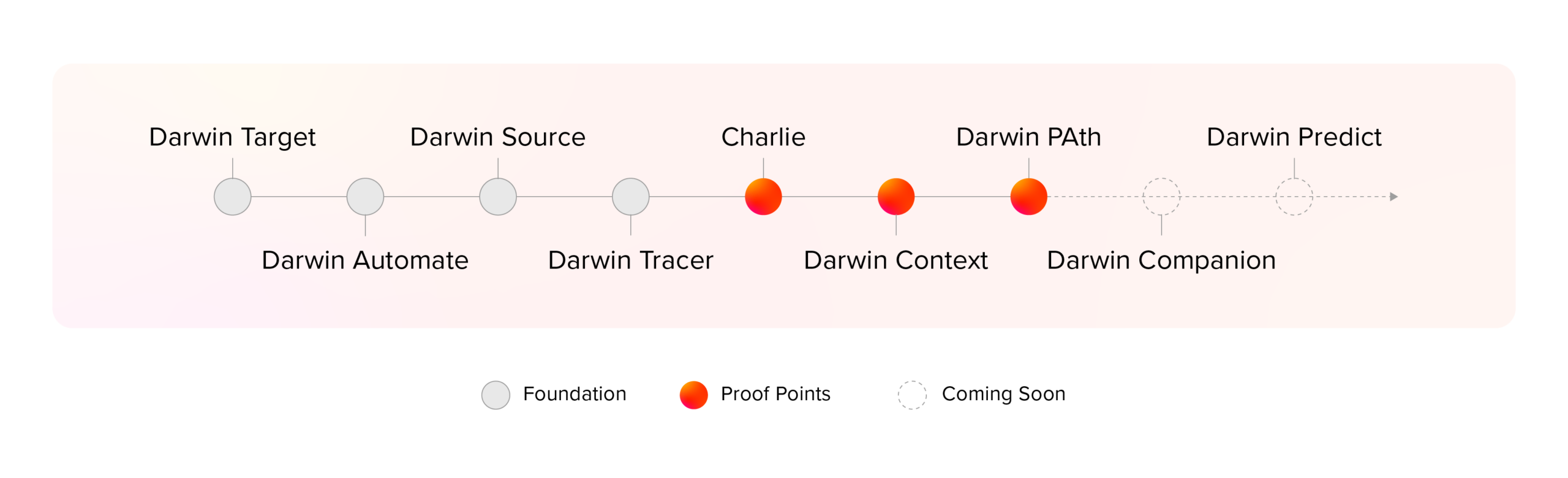
None of this started from a blank page, either. With Darwin Target, we had already leveraged machine learning models before the generative AI explosion. Darwin Automate brought robotic process automation to operations. Those experiences reinforced a principle that still guides us: start with the problem, then choose the technology best suited to solve it.
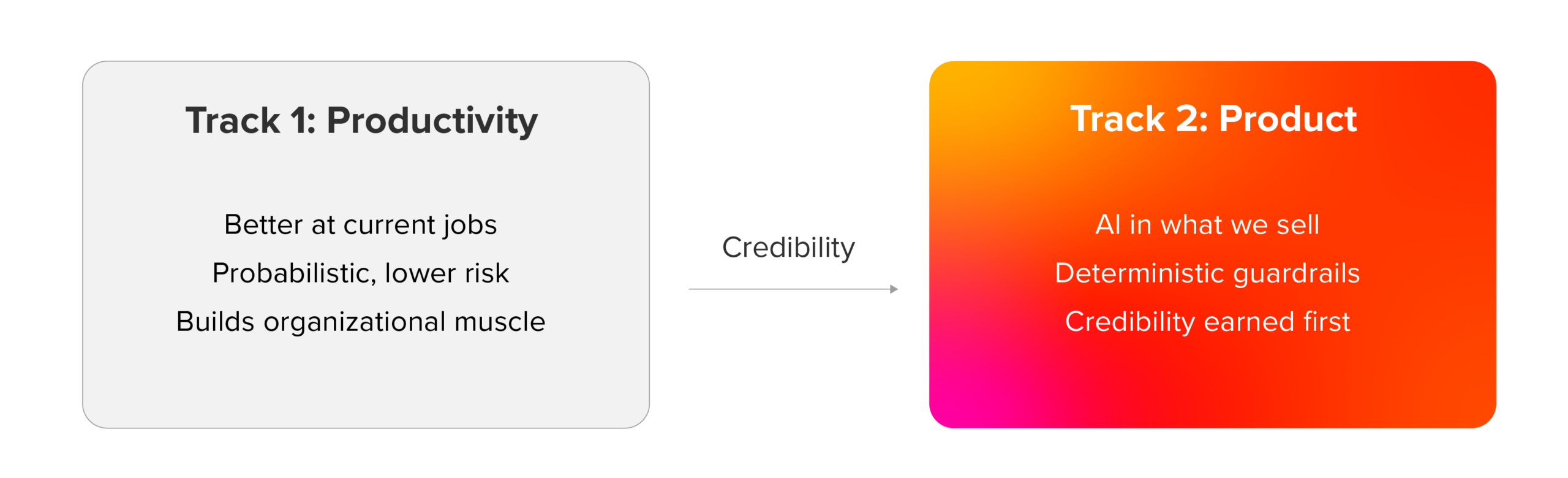
That grassroots energy quickly created a decision we had to make deliberately: separate productivity from product. Track 1 made our people better at their current jobs: lower risk, more tolerance for probabilistic output, and the fastest way to build organizational muscle. Track 2 put AI into what we sell, which demands deterministic guardrails and credibility you have to earn first.
The credibility Track 1 built is what funded the bigger bets in Track 2. Some of what we build needs AI directly in the flow. Some needs deterministic code with no inference anywhere near it. The discipline is knowing which is which, use case by use case.
From Instrumentation to Institutional Intelligence
Darwin Source mapped our source code so engineers could build better solutions of every kind, AI included. Darwin Tracer added visibility into how claims move through decisions and modules, so the logic behind each outcome can be documented and explained.
Together, they let us map the code paths and configurations of our adjudication engine into what we call the PBM Genome: the hardest, highest-stakes system, instrumented first. That produced an API framework we exposed through MCP, so Charlie, Darwin’s assistant, could orchestrate existing platform capabilities. Build the pipes once, and anything can flow through them.
We also applied AI to operational workflows, including prior authorization, and used engineering agents to accelerate code review, testing, and technical debt reduction: on one 25,000-line core service, a single engineer working with agents took an estimated 32 days of remediation work, including 750 code smells and every open bug, to zero in three working days.
One team self-organized into generative AI on its own; the culture had spread beyond the teams we originally equipped. Engineering is where we’re pushing hardest next, moving toward agentic development as the primary way we build software.
Building Infrastructure that Evolves
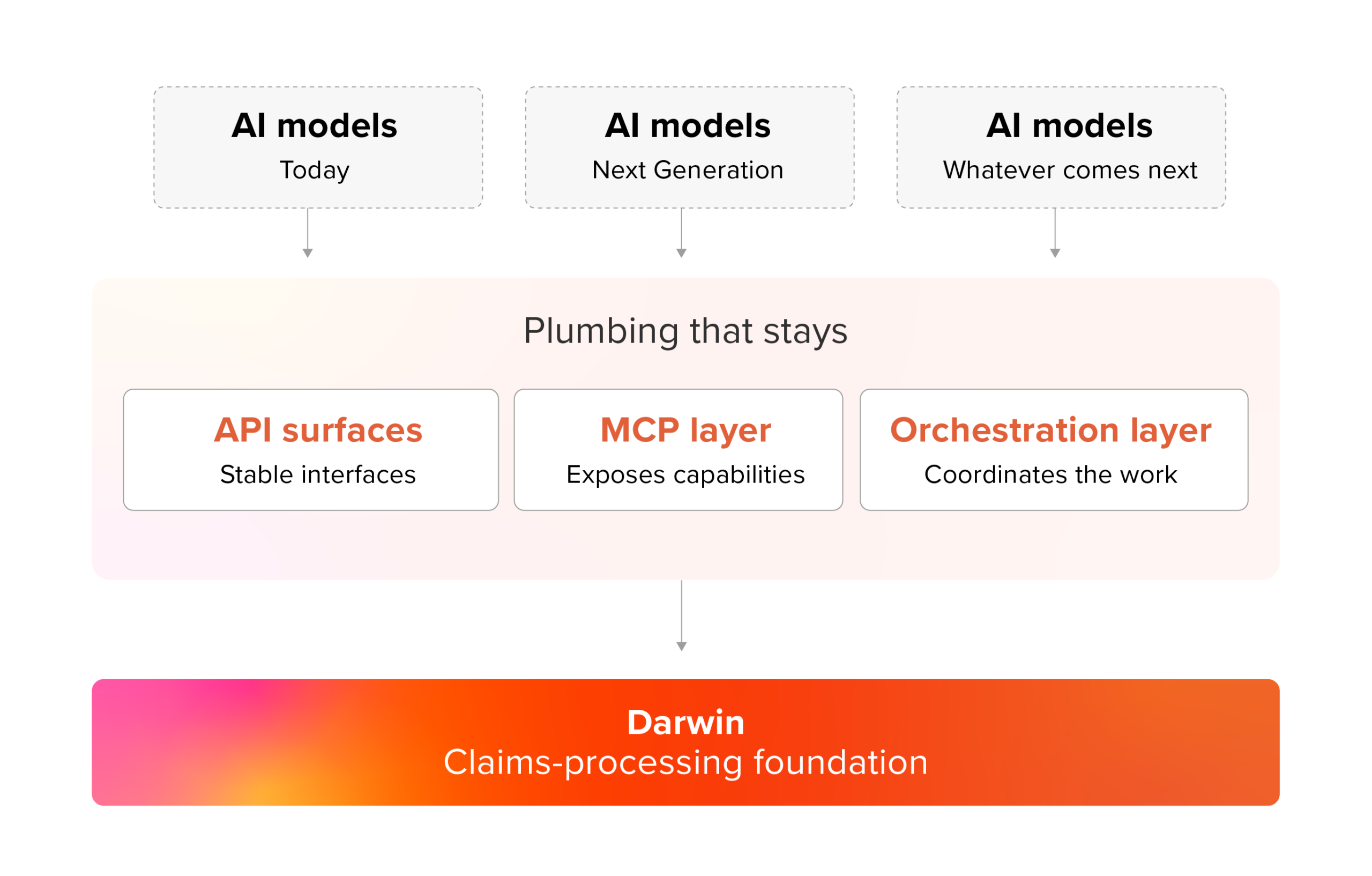
None of that happened in a straight line. We pivoted repeatedly, and we will keep pivoting, because the one design principle we held constant is what made every pivot survivable: build the plumbing, not the fluid. Open for extension, closed for modification: the O in SOLID, applied at platform scale. The API surfaces, the orchestration layer, the integration points; those stay. What runs through them changes as the technology does.
Today’s AI is the least capable it will ever be. We didn’t design for today’s models. We designed frameworks that let us plug in whatever comes next without having to rebuild what we already trust.
Darwin H/I: Where the Plumbing Pays Off
That plumbing is what Darwin H/I runs on. Underneath is Darwin, our claims-processing foundation: more than 80 modules, with dozens of services exposing over 2,500 internal endpoints. We apply intelligence across that surface one workflow at a time, with controls matched to what’s at stake in each.
Darwin Context is the platform’s information layer. It connects Abarca’s code, configuration, and documentation across every domain, so people and applications can understand what’s relevant before they act: better requirements, fewer missed opportunities, and more context than any one person can hold in their head. Charlie works on both sides of the screen. Users ask questions, simulate scenarios, and take action across platform capabilities in plain language, and Charlie does it through the same endpoints everything else on the platform uses; no back doors.
Darwin PAth applies the same discipline to prior authorization. Charlie, running as an agentic workflow, extracts data from incoming requests, assembles the case, connects the clinical evidence, and recommends a determination, so the clinician makes the final call faster. Where clients use the full automation suite, the time it takes to work a case has dropped sharply: down 49.2% this year. We’re extending those capabilities to more clients now. That efficiency powers the next phase of the Better Care Program: faster access to care and better outcomes for our members.
Darwin Companion, the next generation of our pharmacy portal, and Darwin Predict, a predictive drug trend management model built on Abarca’s proprietary data, are in development. Some of what we ship will be replaced by better versions; that’s the design working. Taken together, this is what Darwin H/I gives a plan: decisions you can trace, platform capabilities you can actually reach, and PA/CD workflows that run leaner.
Four Principles that Guide the Work
Two years in, four principles guide how we build and apply AI.
1. Fit the technology to the use case. AI is not a silver bullet: inference where it helps, deterministic code where it doesn’t, and the consequences of error decide.
2. Support experts with the right controls. Oversight, traceability, and explainability are designed around the decision, not bolted on after.
3. Build for evolution. Models and solutions will change; the infrastructure underneath shouldn’t have to.
4. Invest in literacy and adoption. The gap between people who use AI well and those who don’t is enormous, and capability alone doesn’t close it; learning, measurement, and deliberate change management do. The numbers above are how we know it’s working.
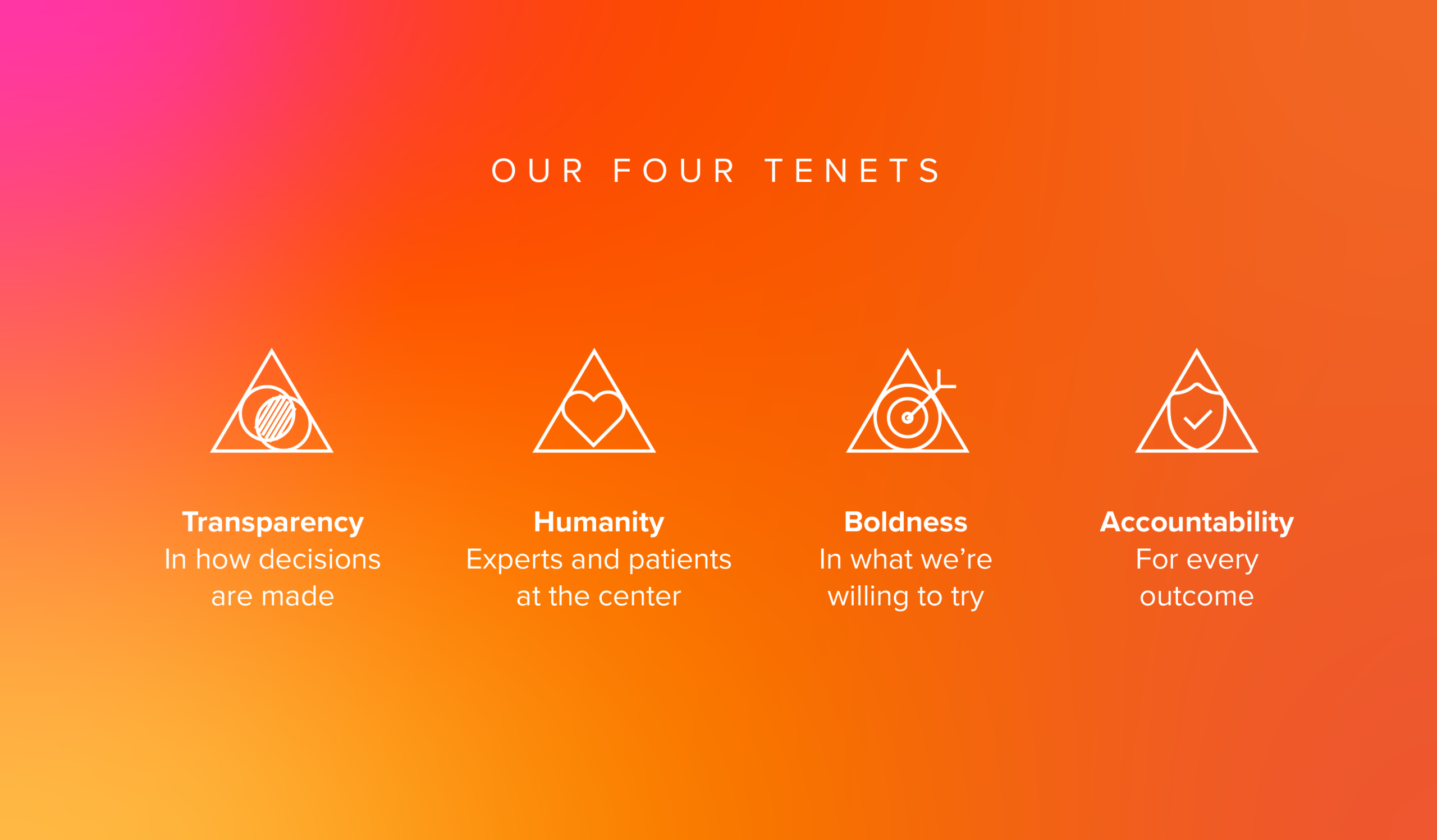
They put into practice our four tenets: transparency, humanity, boldness, and accountability.
Why this Matters for What We’re Building Together
This is the part I keep coming back to. Abarca brings an organization that has already done the hard, unglamorous work of building AI culture and AI-ready infrastructure inside one of the least forgiving corners of healthcare.
LucyRx brings deep clinical and specialty expertise, a care-first approach, and a culture built on integrity, innovation, and humanity, along with a commitment we share: getting this right rather than getting it fast. Together, we’re not just combining two client books to reach more than 9 million members. We’re pairing a technology foundation built to absorb the next generation of AI with the clinical and specialty judgment that knows exactly where that technology needs to show up for patients and plans. Neither half gets there alone. Darwin H/I is where that combination starts to become visible.
Strategy gets you a roadmap. Culture gets you people solving problems before you know they exist.
_____
About Abarca Health
At Abarca Health, we believe in an Unstoppable Drive for a Better Way. We combine innovative technology and healthcare expertise to make pharmacy benefit management more seamless and personalized. From AI and predictive analytics to specialty pharmacy solutions. We transform complex challenges into opportunities and deliver PBM like no one else.
Following the strategic combination with LucyRx, Abarca now operates as a wholly owned subsidiary of Healthcare Revolution Partners, strengthening its scale and capabilities across commercial and government markets.
Discover how Abarca is helping shape a better future for healthcare.
Last Updated on October 27, 2026